Laravel Package Ocean: Your Gateway to Premium, Scalable Content Management
Navigate a vast ecosystem of powerful tools and features designed to elevate your Laravel applications beyond standard CMS limitations.
Hire Expert Laravel Developers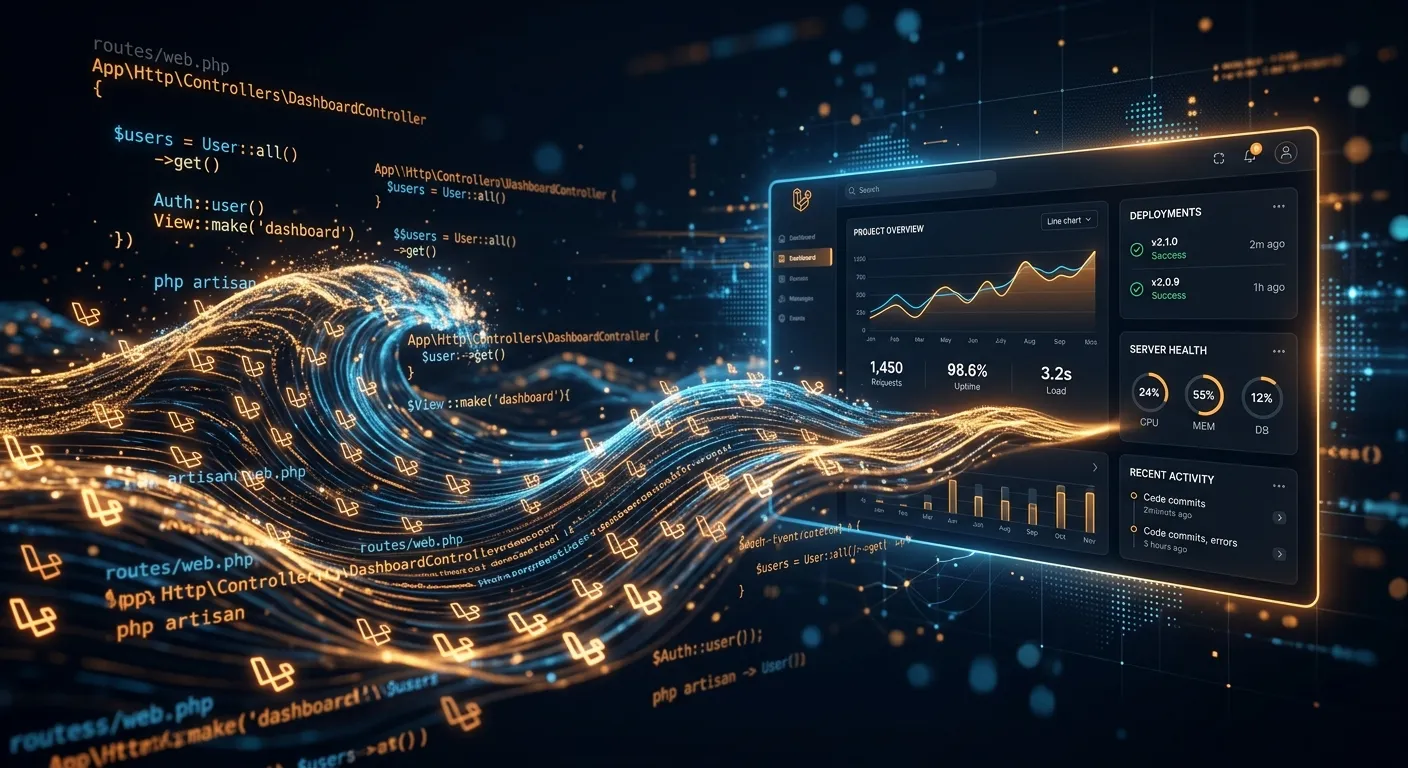
Explore the Laravel Package Ocean
The Laravel Package Ocean refers to the immense, ever-growing collection of Composer packages, modules, and pre-built solutions specifically crafted for the Laravel PHP framework. This ecosystem is what transforms Laravel from a great framework into a powerhouse platform capable of handling any project, from a simple blog to a complex enterprise application.
Unlike rigid, monolithic systems, Laravel's package-driven architecture offers unparalleled flexibility. You can pick and choose the exact functionality you need, ensuring your application remains lean, performant, and tailored to your business goals. This approach is central to platforms like Waravel, which build upon this ocean of possibilities to deliver a complete, Laravel CMS like WordPress, but with modern developer ergonomics and scalability.
Navigating this ocean effectively requires understanding core packages for authentication, API development, payment processing, and, crucially, content management. The right selection forms the bedrock of a successful digital product.
Integration within the Laravel Package Ocean is streamlined thanks to Composer and Laravel's elegant Service Provider architecture. However, true seamless integration goes beyond simple installation. It involves ensuring packages work cohesively, share configurations, and don't conflict, which is a key value provided by curated solutions.
For teams migrating from legacy systems, this integration is vital. Tools like the WordPress Migration Tool from Waravel are themselves sophisticated packages that integrate deeply with Laravel to handle data transformation, SEO preservation, and media migration, turning a complex process into a managed service. This mirrors the philosophy detailed in our guide on How To Migrate Your Entire WordPress Site To Laravel Without Losing A Single Byte Of Data.
Successful integration ensures that your Laravel Platform is not a patchwork of code but a unified, robust system.
While Laravel itself doesn't offer official"certifications" for specific packages, the concept of Content Management Certifications is highly relevant in the professional sphere. It signifies verified expertise in implementing and managing complex content systems built on frameworks like Laravel.
For businesses, seeking developers or agencies with proven experience—evidenced through case studies, deep technical portfolios, or recognized platform certifications—is crucial. This expertise ensures your project leverages the Laravel Package Ocean correctly, adhering to best practices for security, Performance Optimisation, and maintainability. When you're ready to hire staff, prioritizing these qualifications leads to better outcomes.
Exploring a Top Laravel Packages Guide is an excellent way to begin understanding the landscape that these certified professionals navigate daily.
Core Benefits of Mastering the Package Ocean
Unmatched Security & Stability
Leverage community-vetted packages with regular updates and security patches. A managed package ecosystem, as seen in Waravel's core features, provides an additional layer of stability, reducing the risk of dependency conflicts and vulnerabilities compared to piecing together disparate open-source tools manually.
Rapid Development Velocity
Accelerate time-to-market by building on proven solutions. Instead of coding complex features like payment gateways or real-time notifications from scratch, integrate mature packages. This allows your team to focus on unique business logic and user experience, a principle that empowers our Laravel Custom Development Services.
Enterprise-Grade Scalability
The package-based architecture is inherently scalable. You can optimize or replace individual components as traffic grows without overhauling the entire system. This modularity is essential for businesses planning long-term growth and is a focal point of any serious Laravel CMS Comparison.
Diving Deeper: What Constitutes the Laravel Package Ocean?
Understanding the composition of this ecosystem is key to harnessing its power. It's not a random collection but a structured hierarchy of tools that serve different purposes in the application lifecycle.
The Foundation: Core & Community Packages
At the base level are the thousands of packages available on Packagist. These range from utility libraries (for handling dates, strings, or PDFs) to full-featured solutions for e-commerce, blogging, or DevOps. The challenge lies in selection, compatibility, and maintenance.
This is where curated platforms provide immense value. They perform the heavy lifting of testing and integrating the most valuable packages into a cohesive system. For instance, exploring Waravel Package Features reveals how a selection of powerful packages is pre-integrated to deliver immediate functionality, much like a expertly stocked toolbox versus a scattered hardware store.
Pro-Tip: Evaluating a Package
Before adding a package to your project, conduct due diligence:
- GitHub Activity: Check commit frequency, open issues, and recent releases. Stale packages are a security risk.
- Download Stats: High numbers often indicate stability and community trust.
- Laravel Version Compatibility: Ensure it supports your Laravel version and doesn't conflict with other dependencies.
- Documentation Quality: Clear docs are a strong indicator of maintainer professionalism.
From Packages to Platform: The Waravel Approach
A platform like Waravel represents the next evolution: a managed, opinionated subset of the Laravel Package Ocean designed for a specific purpose—content management and application development. It takes exemplary packages for areas like media handling, user roles, page building, and SEO, and integrates them seamlessly with a beautiful admin interface.
This approach eliminates the"integration tax"—the hidden cost in developer hours spent making packages work together. It's a turnkey solution that still offers the flexibility of Laravel at its core. You get the benefits of the vast Laravel Package Ocean without navigating its complexities alone. This is particularly beneficial for businesses executing a WordPress to Laravel Migration, as they need a stable, feature-complete platform from day one.
The video above demonstrates how automated migration tools, built using robust Laravel packages, can seamlessly transfer content into a modern Laravel CMS environment, showcasing the practical output of a well-curated package ecosystem.
Strategic Implementation for Business Growth
Choosing the right path through the Laravel Package Ocean is a strategic business decision with direct implications on cost, agility, and competitive advantage.
The DIY Path
Your team manually selects, installs, and maintains all packages. This offers maximum control but requires high internal expertise, carries significant ongoing maintenance overhead, and risks project delays due to integration issues. It's suitable only for teams with deep Laravel experience.
The Curated Platform Path (Recommended)
You adopt a pre-integrated platform like Waravel. This provides a proven, stable foundation with core CMS and business features out-of-the-box. It dramatically reduces initial development time and long-term maintenance burden, allowing your team to focus on customization and unique value propositions. This path aligns with modern Strategic Brand Building principles, where a reliable digital foundation is key.
The Hybrid Path
Start with a curated platform for 80% of your needs (admin, content, users), then extend it with custom packages or development for highly specialized functionality. This balances speed with flexibility and is the most common approach for growing businesses.
Actionable Advice: Your Implementation Checklist
- Define Core Requirements: List must-have features (e.g., multi-user editing, custom fields, API-driven headless frontend).
- Audit Internal Expertise: Honestly assess if your team has the Laravel and package management skills for a DIY approach.
- Evaluate Platforms: Compare options like Waravel against others. Review their case studies and alternatives to October CMS.
- Plan for Migration: If moving from an old system, prioritize data integrity. Use proven tools for Migrate WordPress to Laravel Effortlessly.
- Consider Talent Strategy: Will you build, train, or buy expertise? Often, the most efficient step is to hire expert Laravel developers who are already certified in navigating these complex ecosystems.
Frequently Asked Questions
While both extend functionality, they operate at different architectural levels. WordPress plugins often hook into a monolithic core, which can lead to conflicts and performance bottlenecks. Laravel packages are modular dependencies managed by Composer, following modern PHP standards (PSR). They are typically more decoupled, testable, and efficient. A platform like Waravel provides a cohesive, plugin-like experience on the surface but is powered by this more robust, scalable package architecture underneath, offering the best of both worlds.
Formal certifications can be a useful trust signal, but practical, proven experience is often more valuable. Look for developers or agencies with a portfolio of successful Laravel CMS projects, contributions to relevant packages, or deep familiarity with specific platforms. When reviewing candidates to hire staff, prioritize those who can articulate the trade-offs between different packages and platforms, as this demonstrates true understanding of the ecosystem beyond a certificate title.
The primary risks are dependency hell (conflicts between package versions), abandonment (a critical package becomes unsupported), and security vulnerabilities in a deep dependency chain. Mitigate these by: 1) Using a curated platform that handles this for core features, 2) Regularly auditing your `composer.json` for outdated or low-activity packages, 3) Keeping Laravel and all packages updated, and 4) Having a contingency plan for replacing critical packages if needed. This is part of professional terms of service and maintenance agreements.
In most cases, yes. A well-architected Laravel platform doesn't lock you in. Since Waravel is built on standard Laravel, you can typically integrate your own custom packages or business logic alongside it. The platform handles the common CMS and admin functionality, freeing you to add specialized packages for your unique needs. This hybrid approach is powerful and is one of the key advantages highlighted in resources to Unlock The Power Of Laravel.
Ready to Navigate the Laravel Package Ocean with Confidence?
Stop struggling with integration headaches and package management. Leverage a curated, enterprise-ready platform built by experts, or hire the specialized talent needed to sail these waters successfully.
Have questions? Our team is ready to help. Contact us for a personalized consultation on your project needs.
Advanced Navigation: Identifying Niche & Specialized Packages
Beyond the well-known authentication or payment packages lies a deeper layer of specialized tools. These packages solve highly specific problems and can be game-changers for particular industries or application types. Mastering the ability to find and evaluate these gems is what separates competent Laravel teams from exceptional ones.
For Complex Data & Reporting
Applications dealing with large datasets, analytics, or business intelligence require packages that go beyond Eloquent's basics. Consider packages for:
- Advanced Query Building: Libraries that provide a fluent interface for complex database reporting with pivot tables, window functions, and dynamic filtering.
- Data Export/Import: Robust solutions for handling CSV, Excel, and PDF exports at scale, with queued jobs and memory optimization for million-row datasets.
- Chart Generation: Server-side charting packages that integrate directly with Laravel data models, enabling automated report generation.
Implementing these manually can take months. A curated platform often includes vetted versions of such packages, pre-configured for common business reporting scenarios, which is crucial for applications transitioning from legacy ERP or CRM systems.
For Real-Time & Async Applications
The demand for real-time features—from live dashboards to collaborative editing—requires a specific subset of packages.
- WebSockets & Broadcasting: While Laravel Echo is a starting point, production applications need packages for horizontal scaling, presence channels, and fallback mechanisms.
- Queue Optimization: Packages for managing priority queues, batch job processing, and monitoring queue health are essential for background task reliability.
- Event Sourcing: For applications requiring full audit trails and complex state reconstruction, event sourcing packages provide a structured Laravel implementation.
The integration complexity here is high. A platform-based approach ensures the WebSocket server, queue workers, and Laravel application share compatible configurations and logging, eliminating a major DevOps hurdle.
Case Study: From Package Sprawl to Streamlined Platform
Consider the journey of"TechPulse Media," a digital publisher who initially built a custom Laravel CMS by assembling over 40 individual community packages for content blocks, user subscriptions, ad management, and analytics.
The Challenge
Within 18 months, they faced:
- Update Paralysis: Updating Laravel required checking compatibility with 40+ packages. One breaking change in a mid-level dependency would halt development for weeks.
- Security Bloat: Each package was a potential attack vector. Monitoring CVEs across all dependencies became a full-time job for a senior developer.
- Inconsistent UX: Each package had its own admin interface style and configuration method, creating a confusing experience for their editorial team.
- Performance Overhead: The sheer number of service providers booting on every request increased response times significantly.
The Platform Solution
TechPulse migrated to a curated Laravel CMS platform. This transition replaced their 40+ disparate packages with a single, cohesive codebase where:
- Core functionality (user management, content types, media library, APIs) was provided by the platform's integrated, tested modules.
- They retained only 5 custom packages for their unique ad-serving algorithms, which were now easier to maintain against a stable core.
- The unified admin interface reduced editorial training time by 60%.
- Security updates and Laravel version upgrades became single-command operations managed by the platform provider.
The outcome was a 70% reduction in operational overhead related to package maintenance, allowing their development team to refocus on building reader-facing features that grew their subscriber base. This mirrors the benefits many businesses realize when they execute a structured WordPress to Laravel migration with a clear end-platform in mind.
Future-Proofing Your Stack: Emerging Trends in the Package Ecosystem
The Laravel Package Ocean is not static. Understanding its currents—the emerging trends and shifting best practices—is crucial for making long-term strategic decisions.
The Rise of Headless & API-First Packages
The decoupling of frontend and backend is accelerating. Newer packages are being designed as API-first from the ground up, offering robust JSON:API or GraphQL endpoints out-of-the-box. This trend impacts:
- Content Management: Packages now focus on being superb content repositories with fine-grained permission APIs, rather than assuming a monolithic frontend.
- Authentication: Sanctum and Passport evolution, plus newer JWT/OAuth2 packages, are simplifying secure API authentication for mobile and SPA clients.
Choosing a platform that embraces this trend ensures your backend is ready to power web, mobile, and future digital touchpoints without rewrites.
Developer Experience (DX) as a Priority
Package maintainers are increasingly competing on developer happiness. This manifests in:
- Zero-Configuration Tools: Packages that auto-discover settings or work with sensible defaults.
- Enhanced Artisan Commands: Packages providing intuitive CLI tools for generation, monitoring, and debugging.
- Improved Testing Utilities: Packages that make it trivial to write tests for complex features like payments or real-time events.
A curated platform aggregates these best-in-class DX packages, meaning your entire team benefits from a smoother, more productive workflow from day one, accelerating feature development and reducing onboarding time for new hired staff.
Strategic Recommendation
Don't just evaluate packages for what they do today. Assess their roadmap, the maintainer's vision, and their alignment with these broader trends. Often, the most future-proof strategy is to build upon a platform whose dedicated team is responsible for this evaluation and integration. They continuously scan the ecosystem, adopting promising new packages and retiring deprecated ones, acting as your dedicated navigator through the evolving Laravel Package Ocean. This proactive curation is a core component of the value offered by comprehensive Laravel Custom Development Services built on a stable platform foundation.