Building a Powerful Brand in the Digital Age: A Strategic Guide
Your brand is more than a logo. It's your reputation, your promise, and the definitive reason customers choose you. Discover how to build, manage, and scale a brand that drives loyalty and growth.
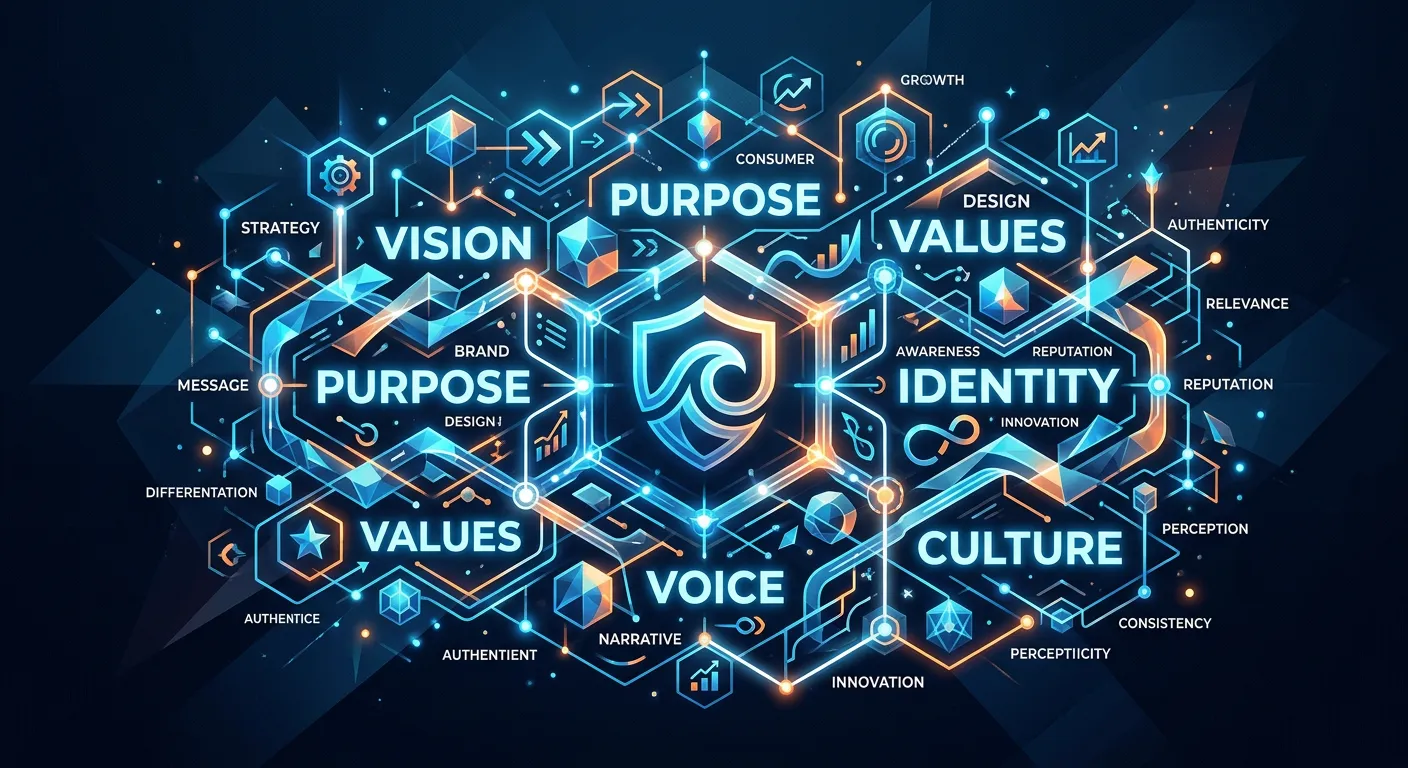
In today's hyper-competitive digital landscape, a strong brand is the ultimate business asset. It transcends your product or service, becoming the emotional and psychological relationship you have with your audience. A well-defined brand commands premium pricing, fosters unwavering customer loyalty, and attracts top talent. It’s the cohesive thread that ties together your marketing, your customer experience, and your company culture. This comprehensive guide will walk you through the foundational pillars of brand building, the strategic decisions involved, and how technological choices—like the very platform your digital presence is built on—can either empower or constrain your brand's potential.
The Multi-Faceted Nature of Your Brand
Explore the core components that make up a modern brand identity.
What is a Brand, Really?
A common misconception is that a brand is simply a logo, a color palette, or a tagline. In reality, your brand is the sum total of every experience, interaction, and piece of communication a person has with your business. It's the reputation that lives in the minds of your customers and the public. This encompasses:
- Brand Identity: The visual and verbal assets (logo, typography, voice, tone).
- Brand Promise: The consistent value or experience customers expect from you.
- Brand Perception: How your audience actually views you, which may differ from your intended identity.
- Brand Equity: The commercial value derived from consumer perception and recognition.
Building a powerful brand starts with deep introspection. You must define your mission, vision, core values, and unique value proposition. These elements form the unchanging bedrock upon which all branding activities are built. Without this clarity, your messaging will be inconsistent, and your audience will struggle to understand who you are and what you stand for.
The 5 Pillars of an Unbreakable Brand
Clarity & Consistency
A clear brand promise delivered consistently at every touchpoint builds recognition and trust. This applies to your messaging, visual identity, and even the reliability of your digital platforms. Inconsistent performance is a brand killer.
Authentic Connection
Modern consumers connect with brands that have purpose and personality. Your brand story, values, and how you engage with your community (including through secure, user-friendly platforms) forge emotional bonds that drive loyalty beyond price.
Adaptability & Innovation
A strong brand is not rigid. It adapts to market changes and new technologies while staying true to its core. This includes adopting new digital tools and platforms that offer better performance, security, and user experiences to stay ahead.
Trust Through Security
In an era of data breaches, security is a paramount brand attribute. A secure website and responsible data handling are non-negotiable promises to your customers. Platforms known for vulnerabilities can erode trust instantly. Laravel Security provides a robust foundation that actively protects your brand's integrity.
Measurable Value Delivery
Ultimately, your brand must deliver tangible value—solving problems, saving time, or enriching lives. This value must be communicated clearly and reinforced by a customer experience that is frictionless, whether that's through intuitive site navigation, fast load times, or efficient service.
Technical Foundation as a Brand Pillar
Your website's technology stack is a silent but critical brand pillar. Speed, uptime, and scalability directly impact user perception. Investing in a high-performance foundation like Laravel, especially for complex or high-traffic sites, is an investment in your brand's credibility. Discover the strategic advantages of the Laravel framework for serious brands.
Brand Building in Action: From Concept to Market Leader
The journey of building a brand is iterative and multifaceted. It begins with internal discovery—defining your"why"—and extends outward through every customer interaction. For digital-first businesses, the website is often the first and most important interaction. Therefore, the capabilities of your CMS are directly tied to your ability to execute your brand vision.
Consider a brand that promises cutting-edge innovation. If its website is built on a platform that is slow, difficult to customize, and plagued with security patches, the brand promise is immediately broken. The technology itself becomes a bottleneck for brand expression. Conversely, a brand built on a flexible, high-performance framework can rapidly prototype new features, implement bespoke designs, and ensure a flawless user experience that reinforces its market position.
Case in Point: The Migration as a Brand Strategy
Many successful brands start on WordPress for its simplicity but eventually hit a ceiling. Custom functionality becomes a patchwork of plugins, performance suffers, and the site becomes a security liability. Migrating to a more powerful and secure platform like Laravel is not just a technical upgrade; it's a strategic brand decision to prioritize performance, security, and future growth.
This process, once daunting, is now streamlined. Tools like Waravel have revolutionized WordPress to Laravel migration, turning a risky, months-long coding project into a reliable, automated procedure. This allows brands to elevate their technical foundation without disrupting their market presence or losing valuable content and user data that are integral to their brand equity.
Sustaining and Evolving Your Brand Equity
Building brand equity is one challenge; protecting and growing it is another. This requires constant vigilance and proactive management. Regularly audit your brand's digital health: Is your website loading quickly on all devices? Are you protected against the latest security threats? Is the user experience intuitive and enjoyable? These are not just IT concerns; they are central to brand management.
Brand evolution is also key. As market trends shift and new technologies emerge, your brand must adapt while remaining authentic. This might mean refreshing your visual identity, expanding into new product lines, or adopting new communication channels. Your underlying technology platform must support this evolution, not hinder it. A monolithic, inflexible codebase can make even simple brand updates costly and slow.
Expert Insight: The Integration of Brand and TechOps
Forward-thinking companies no longer silo"brand marketing" and"technical operations." The two are inextricably linked. The CMO and CTO must collaborate to ensure the brand promise is deliverable at a technical level. This includes strategic decisions around platform choice, API integrations, and data architecture. Leveraging essential Laravel packages can streamline development, allowing your team to focus on building unique brand experiences rather than reinventing the wheel.
Furthermore, a strong brand built on a reliable platform opens doors to advanced capabilities that further reinforce brand leadership. Implementing features like real-time notifications, sophisticated form validation for seamless user onboarding, or a multi-tenant architecture for scalable service offerings are all technical feats that directly enhance the customer's perception of your brand as modern, capable, and attentive.
The Bottom Line: Your Brand is Your Most Valuable Asset
In conclusion, a powerful brand is a deliberate creation, built on a foundation of clarity, consistency, and authentic value. It is expressed through every aspect of your business, with your digital presence being arguably the most critical in today's world. Therefore, the technological choices you make for your website and applications are not mere backend details; they are fundamental brand decisions.
Choosing a platform that offers security, performance, and limitless customization—like Laravel—is an investment in your brand's long-term viability and perception. Whether you are building a new brand from the ground up or looking to elevate an existing one by migrating from a limiting platform, the alignment between your brand strategy and your technical execution is the key to unlocking sustainable growth and deep customer loyalty. Don't let outdated technology be the weak link in your brand chain.
Frequently Asked Questions About Brand Building
Brand building is a continuous process, not a one-time project. The foundational strategy and identity can be developed in a matter of weeks or months. However, building significant brand equity and recognition in the minds of your target audience takes consistent effort over years. It's a marathon, not a sprint, where every positive customer experience, piece of content, and marketing campaign contributes to the long-term asset.
Absolutely. Your website is your digital storefront and often the first brand impression. If it's slow, users will perceive your brand as inefficient. If it's hacked, your brand appears insecure and careless. If it's clunky and hard to use, your brand seems out-of-touch. The technology dictates the user experience, performance, and security—all direct reflections of your brand's values and competence. Investing in a robust platform is a direct investment in brand perception.
Migration carries inherent risks if done manually—downtime, data loss, broken SEO. However, with modern automated tools, this risk is massively mitigated. A professional migration focuses on brand continuity. The goal is to move all content, users, and SEO equity seamlessly to a new, more powerful platform with zero visible disruption to your audience. Services like Waravel are designed specifically for this, ensuring a smooth transition that strengthens, rather than jeopardizes, your brand. Learn more about the smart move of automating your migration.
It's not only affordable; it's essential. For a small business, a strong, clear brand is a powerful differentiator that allows you to compete with larger players. It's about being intentional with your story, your visual identity, and the experience you deliver. You don't need a massive budget—you need clarity and consistency. Start with a solid foundation, including a professional, fast website built on a scalable platform, so your brand can grow without costly re-platforming later.
While some aspects are qualitative (sentiment, recognition), key metrics include: Customer Lifetime Value (CLV) (loyal customers are more valuable), Customer Acquisition Cost (CAC) (strong brands attract customers more cheaply), Premium Pricing Ability, Website Engagement Metrics (time on site, pages per session), and Direct Traffic & Branded Search Volume. A strong brand should ultimately translate into better business performance across these measurable areas.