Content Manager Cars: Revolutionizing Automotive Digital Strategy
In the high-octane world of automotive marketing, mastering your content is the key to outmaneuvering the competition. This comprehensive guide explores the pivotal role of Content Manager Cars, the strategic advantages of modern CMS enrollment, and how to hire the expert staff needed to drive your brand forward.
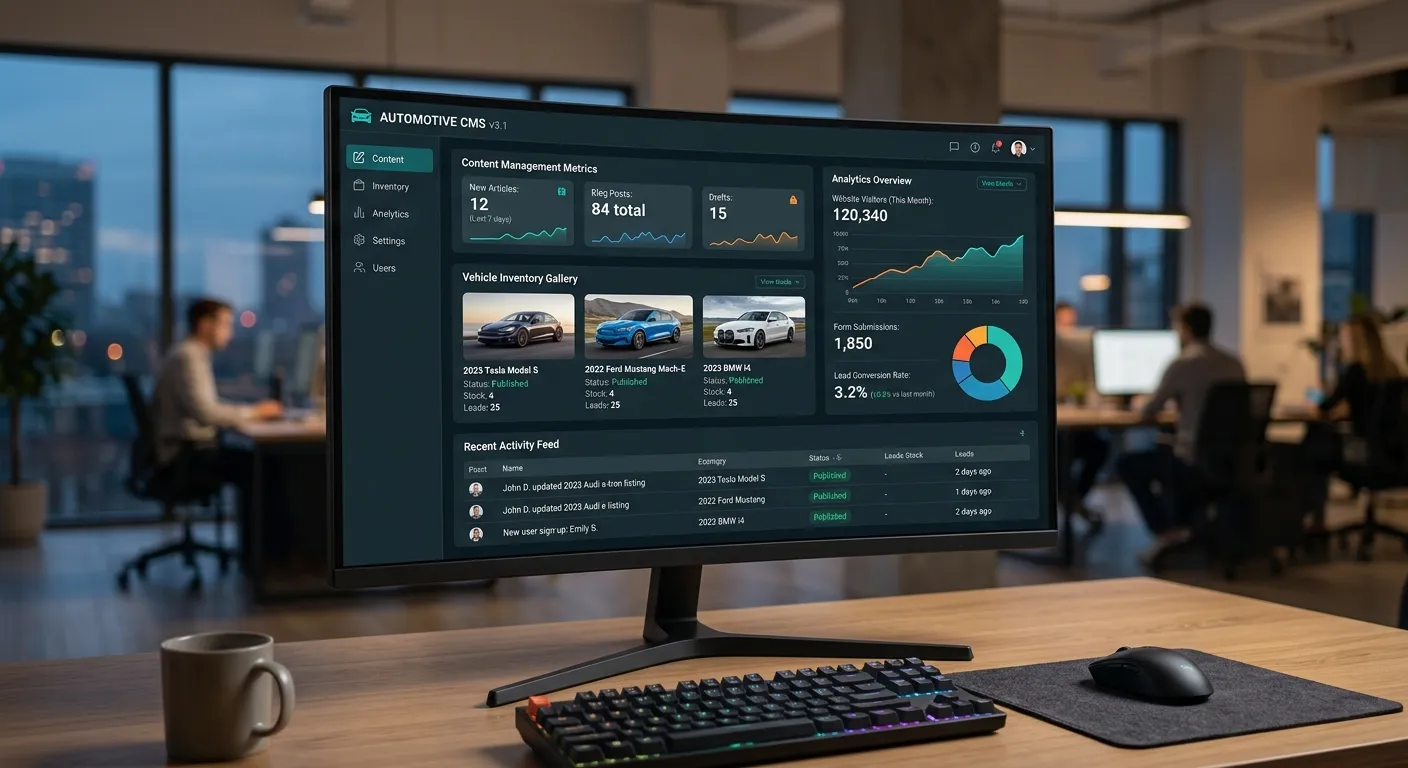
Navigating the Digital Showroom: A Multi-Category Overview
The landscape of automotive content management is multifaceted. Use the interactive tabs below to explore the core categories that define success in managing Content Manager Cars.
Building a Cohesive Automotive Content Strategy
A successful strategy for Content Manager Cars goes beyond posting specs and photos. It involves creating a narrative that connects with buyers at every stage of their journey, from initial research to post-purchase loyalty. This requires a deep understanding of vehicle segmentation, target demographics, and seasonal marketing cycles. Integrating your content plan with a robust Strategic Brand Building Guide ensures consistency and impact across all touchpoints.
Key considerations include inventory synchronization, localized content for dealerships, and seamless integration with third-party listing sites. The strategy must be agile, allowing for rapid updates to reflect new model launches, pricing changes, and special offers. Without this foundational plan, even the most sophisticated CMS enrollment process will fail to deliver ROI.
Selecting and Enrolling in the Right Automotive CMS
The core platform for managing Content Manager Cars is your Content Management System. Modern solutions offer far more than basic page editing. Look for features like bulk vehicle data import/export, digital asset management for high-resolution imagery and 360° tours, and API connections to dealer management systems (DMS). The process of CMS enrollment Aiou—or any robust platform—should be smooth and well-documented.
Many businesses are moving from legacy systems to more powerful, secure frameworks. A WordPress to Laravel migration can be a game-changer, offering superior performance, customizability, and security for managing complex automotive data. Platforms like Waravel provide a Laravel CMS with a WordPress-like interface, easing the transition for your team while unlocking advanced capabilities.
Hiring the Expert Staff for Your Content Engine
Your technology is only as good as the people operating it. Hiring the right staff is critical. You need professionals who understand both automotive passion and digital precision. Roles may include Automotive Content Managers, Digital Asset Specialists, SEO Analysts for vehicle listings, and CMS Administrators.
When you're ready to hire staff today, look for candidates with proven experience in similar high-stakes, inventory-heavy environments. They should be adept at using modern CMS tools, understand the importance of performance optimization for fast-loading vehicle pages, and be capable of managing complex user migration projects if consolidating platforms. Building this team is an investment that directly correlates to online sales and lead quality.
Leveraging AI and Automation in Automotive Content
Artificial Intelligence is transforming Content Manager Cars from a manual chore into a strategic advantage. AI can automate tedious tasks such as tagging thousands of vehicle images, generating unique descriptive text for similar trims, and personalizing content for website visitors based on their browsing behavior.
Imagine a system that automatically suggests complementary upsell content (like roof racks for an SUV) or optimizes all vehicle images to WebP format for faster page loads. These are not futuristic concepts but available tools. Integrating AI requires a CMS that supports such innovation, further underscoring the importance of a forward-thinking Laravel platform over a rigid, plugin-dependent system.
Pro Tip: The Platform Migration Advantage
If your current CMS for Content Manager Cars is limiting growth, consider a platform shift. Modern migration tools can handle the complexity. For instance, you can learn how to migrate your entire WordPress site to Laravel without losing a single byte of data. This process preserves your SEO equity, vehicle data, and media libraries while moving you to a more powerful, scalable system designed for the future of automotive retail.
Key Benefits & Features of Modern Content Manager Cars Systems
Implementing a sophisticated system for managing automotive content delivers tangible benefits across your organization. These features form the cornerstone of a competitive digital presence.
Centralized Vehicle Data Hub
Eliminate data silos by maintaining a single, authoritative source for all vehicle information—specifications, pricing, availability, and dealer locations. This ensures consistency across your website, mobile app, and third-party marketplaces, reducing errors and manual updates.
Blazing-Fast Performance & SEO
Modern CMS frameworks built for scale, like Laravel, deliver exceptional page load speeds—a critical factor for SEO and user experience, especially on image-heavy vehicle detail pages. Proper performance optimisation is built-in, not an afterthought.
Enhanced Security & Compliance
Protect sensitive customer data and inventory information with enterprise-grade security. Moving away from common, vulnerability-prone platforms to a custom Laravel CMS alternative can drastically reduce security incidents and ensure compliance with data protection regulations.
Streamlined Content Workflows
Implement role-based permissions and approval chains for publishing new vehicle listings, blog posts, or promotional content. This creates efficient, error-proof processes for your marketing and sales teams, whether they are at headquarters or across a network of dealerships.
Scalable Architecture for Growth
A system designed for Content Manager Cars must grow with your business. Whether adding new brands, entering new regions, or integrating with emerging sales channels (like online direct sales), a flexible Laravel custom development approach ensures your platform is never a bottleneck.
Integrated Analytics & Insights
Go beyond basic page views. Track engagement metrics specific to automotive content: time spent on vehicle configurators, brochure downloads, lead form submissions per model, and comparison tool usage. These insights directly inform inventory planning and marketing spend.
Deep Dive: Implementing Your Content Manager Cars System
Phase 1: Audit and Strategy Development
Before any CMS enrollment Aiou process begins, conduct a comprehensive audit of your existing digital assets. Catalog all vehicle data points, images, videos, and written content. Assess the user journeys on your current site and identify friction points. This phase should answer key questions: What is the volume of content? How is it currently managed? What are the integration points with CRM, DMS, and PIM systems?
This strategic groundwork is as crucial as the technical implementation. It aligns marketing, sales, and IT teams on a common vision. Resources like our guide to core features can help you build a requirements checklist that focuses on differentiation and results, not just basic functionality.
Phase 2: Platform Selection and CMS Enrollment
Choosing the right platform is a make-or-break decision. While many think of popular open-source options, the needs of automotive content are unique. You require a system that can handle complex data relationships (e.g., models, trims, options, colors) and high-volume media. This is where exploring a Laravel CMS comparison becomes invaluable.
The enrollment or setup process should be managed as a project. It involves configuring the data schema, user roles, templates for vehicle pages and blog articles, and setting up staging environments. A successful enrollment ensures the system is tailored to your business logic from day one, avoiding costly rework later.
Phase 3: Data Migration and Integration
This is often the most technical and risk-prone phase. Migrating years of vehicle data, customer reviews, and optimized content must be done with precision to maintain SEO rankings and data integrity. Automated tools are essential. For example, a robust WordPress migration tool can seamlessly transfer content, custom fields, and media to a new Laravel-based system.
Integration with third-party systems is also critical. Your new Content Manager Cars system should act as the hub, pulling real-time inventory from your DMS and pushing leads to your CRM. APIs and webhooks facilitate this communication. Planning for these integrations during the CMS enrollment phase prevents post-launch disruptions.
Phase 4: Team Training and Process Adoption
Technology adoption fails without user buy-in. Comprehensive training for your content team, regional marketers, and dealership personnel is non-negotiable. Develop clear documentation, video tutorials, and hands-on workshops. Focus on the daily tasks: how to add a new vehicle, update a price, publish a promotional blog post, and generate a performance report.
This is also the stage to正式 launch your hiring initiative if you need to augment your team. Use a dedicated portal to hire staff today with the specific skills to leverage the new system's advanced features, such as bulk operations or AI-powered content suggestions.
Phase 5: Launch, Monitor, and Optimize
Go live with a phased approach, perhaps starting with a single brand or region. Monitor site performance, user feedback, and team efficiency closely. Use analytics to track key metrics like content update velocity, time-to-market for new listings, and website engagement scores.
Continuous optimization is key. As you unlock the power of your new Laravel CMS, you'll discover opportunities for further automation and personalization. Regularly revisit your strategy to incorporate new vehicle technologies, changing consumer behaviors, and emerging digital sales channels.
Expert Insight: The Cost of Inaction
Sticking with an outdated, manual, or insecure system for managing Content Manager Cars has a real cost. It manifests in missed sales opportunities due to inaccurate or slow-to-update inventory, higher labor costs for repetitive tasks, security vulnerabilities that risk customer data, and an inability to compete with digitally-native automotive retailers.
Investing in a modern CMS enrollment process and the right team is not an expense; it's a capital investment in your sales and marketing infrastructure. The ROI is measured in increased lead volume, higher website conversion rates, improved brand perception, and operational efficiency. The journey begins with a commitment to change and the right partners, like those who offer effortless migration paths and powerful platforms.
Frequently Asked Questions (FAQ)
Get answers to the most common questions about implementing and managing Content Manager Cars systems.
"Content Manager Cars" is a dual-concept term. Primarily, it refers to the specialized role or team responsible for managing all digital content for an automotive business—vehicle listings, specs, images, videos, blog posts, and promotional material. Secondly, it refers to the technology system or CMS (Content Management System) used to execute that management efficiently. It encompasses the strategy, people, and tools needed to control the automotive digital narrative.
"CMS enrollment Aiou" signifies the process of formally adopting and configuring a Content Management System tailored to complex needs. For automotive businesses, a proper enrollment process is critical because it ensures the system is set up correctly from the start to handle unique challenges: thousands of SKUs (vehicles), complex attribute relationships (model, trim, options), high-resolution media assets, and integration with inventory databases. A haphazard setup leads to data chaos, inefficient workflows, and an inability to scale. A structured enrollment, potentially using a specialized platform, lays the foundation for a centralized, scalable, and high-performing digital hub.
Beyond standard content creation and SEO skills, an automotive Content Manager needs:
Technical Proficiency: Experience with the specific CMS (e.g., WordPress, Laravel-based systems like Waravel) and understanding of basic HTML/CSS for content formatting.
Data Management Acumen: Ability to work with large datasets, import/export CSV files for vehicle data, and maintain data accuracy.
Automotive Knowledge: Understanding of vehicle terminology, trim levels, and features to create accurate, compelling descriptions.
Visual Asset Coordination: Skill in managing photo and video shoots, editing basics, and ensuring media meets quality and technical standards (size, format).
Analytical Mindset: Ability to interpret website analytics related to vehicle page performance and lead generation.
For many dealerships and automotive groups, the answer is a resounding yes. While WordPress is user-friendly, it can become slow, insecure, and cumbersome when managing hundreds of dynamic vehicle listings, high-resolution galleries, and complex integrations. A Laravel-based CMS offers:
• Superior Performance & Security: Built for enterprise applications, leading to faster page loads and reduced vulnerability.
• Customizability: Can be tailored precisely to automotive workflows, unlike off-the-shelf WordPress themes/plugins.
• Better Data Handling: More efficient at managing the relational data inherent in vehicle inventories.
The effort is mitigated by using automated migration services. The long-term benefits in operational efficiency, customer experience, and scalability often provide a strong return on investment. Explore the possibilities with our custom development services.
AI is a powerful force multiplier for Content Manager Cars teams. Practical applications include:
• Automated Content Tagging & Categorization: AI can analyze images and automatically tag them with vehicle features (sunroof, leather seats, alloy wheels).
• Dynamic Content Personalization: Display different vehicle recommendations or promotional content based on a user's browsing history and location.
• SEO Content Generation: AI-assisted tools can help create unique, optimized meta descriptions and alt text for thousands of vehicle images at scale.
• Predictive Analytics: Analyze content performance data to predict which vehicle types or content formats will generate the most engagement or leads in upcoming seasons.
• Chatbots for Lead Qualification: Integrate AI chat to answer basic inventory questions on vehicle pages 24/7, capturing leads even outside business hours.
Ready to Transform Your Automotive Content Management?
Stop letting outdated systems and processes stall your growth. Whether you need to hire expert talent, migrate to a modern platform, or develop a comprehensive strategy, the time to act is now.
Explore more resources to empower your digital journey:
© 2026. All rights reserved."Content Manager Cars" is a comprehensive methodology for modern automotive digital management.