Cms Cannon Street: Hire Laravel Experts to Build a Secure, Scalable Enterprise CMS in Cannon Street
SEO Title: Cms Cannon Street: Hire Laravel Experts to Build a Secure, Scalable Enterprise CMS in Cannon Street
SEO Description: Hire Cms Cannon Street specialists and Laravel developers to build a secure, high-performance enterprise CMS in Cannon Street, covering authentication, content workflows, migration, and scalable delivery.
Cms Cannon Street is a modern, enterprise-ready content management initiative designed for organisations that need speed, governance, security, and long-term scalability. It combines the discipline of a structured Laravel platform with the operational needs of content teams working in fast-moving digital environments. Whether you are migrating from WordPress, replacing a legacy CMS, or building a new digital estate from scratch, Cms Cannon Street offers a practical path forward.
This guide explains what Cms Cannon Street is, how it supports content operations, authentication, migration, performance, and team delivery. It also shows why hiring the right Laravel specialists is essential when building a CMS that must serve editors, developers, compliance teams, and end users at the same time.
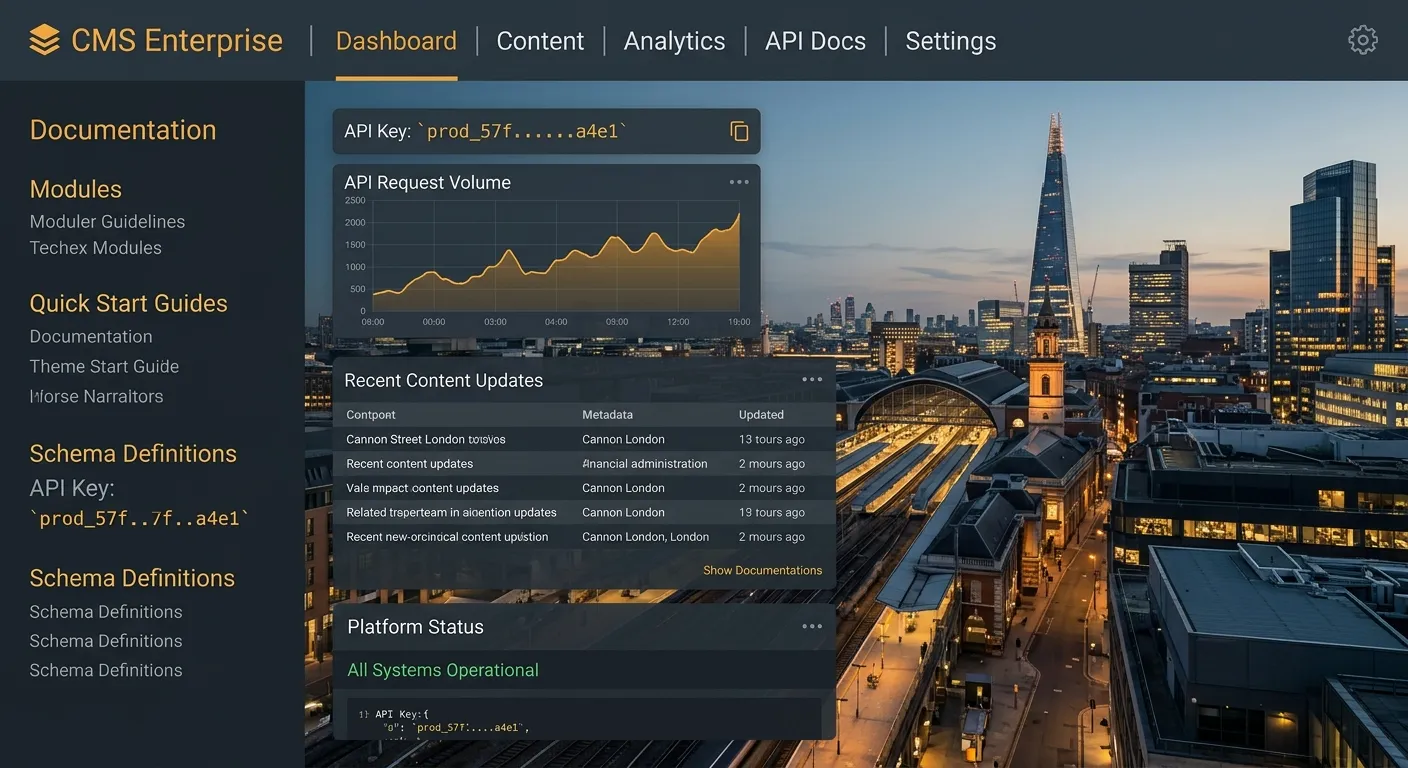
About Cms Cannon Street
What Is Cms Cannon Street?
Cms Cannon Street is best understood as a content platform strategy, not merely a software label. It refers to a professionally managed, Laravel-oriented CMS environment that supports structured content, secure user access, editorial workflows, and enterprise integrations. The name anchors the platform to a London business district, but the approach applies to any organisation that needs a disciplined, scalable content system.
Why Cms Cannon Street Matters for Digital Teams
Many teams struggle because their CMS is too simple for enterprise needs or too complex for everyday editors. Cms Cannon Street addresses that gap by separating concerns: content modelling, authentication, publishing, media management, performance, and migration are treated as first-class capabilities. This makes it easier to support marketing, legal, product, and engineering teams without forcing every workflow through a single fragile interface.
Who Uses It?
- Marketing teams that need fast publishing and reusable content blocks
- Enterprise IT teams that require secure authentication and predictable deployment
- Compliance and governance teams that need auditability and role-based access
- Product teams that want a CMS capable of supporting portals, campaigns, and documentation
- Agencies and internal studios that need a stable Laravel foundation for long-running client platforms
If your team is evaluating options, it helps to compare popular Laravel CMS options before committing to an architecture. Cms Cannon Street is most effective when the platform, team, and delivery process are aligned from day one.
Interactive Overview of Cms Cannon Street
Content Operations
Cms Cannon Street supports structured authoring, reusable blocks, and predictable publishing. Instead of treating every page as a one-off template, teams can build content models that reflect real business objects such as campaigns, locations, products, policies, and documentation sets.
- Block-based editing for consistent layouts
- Draft, review, and approval states
- Versioning and rollback support
- Media organisation with reusable assets
- SEO metadata controls at page and section level
Security & Laravel Login Documentation
Authentication is one of the most important parts of any enterprise CMS. Cms Cannon Street should follow secure Laravel patterns, including session management, password hashing, role-based access control, and clear documentation for login and permission flows. Reviewing Laravel Login Documentation early helps teams avoid fragile custom authentication later.
- Secure login and logout routes
- Role and permission matrices
- Audit trails for editorial actions
- Support for SSO or enterprise identity providers
- Protection against common authentication weaknesses
Migration & Performance
Moving from WordPress or another legacy system requires a plan for content, users, media, redirects, and performance. Cms Cannon Street migration projects work best when they are staged, measured, and validated against SEO and user experience goals. A strong user migration process prevents access issues and preserves trust.
- Content mapping and transformation
- Media library transfer
- Redirect handling
- Database performance tuning
- Cache and asset optimisation
Talent & Delivery
A CMS is only as good as the team that builds and maintains it. Cms Cannon Street projects need Laravel developers, content strategists, QA specialists, and sometimes DevOps or security consultants. Hiring with a clear delivery brief is far more effective than recruiting for a vague “CMS project”.
Hire Cms Cannon Street Talent TodayKey Features and Benefits of Cms Cannon Street
Structured Content Modelling
Cms Cannon Street encourages reusable content types rather than loose page templates, helping teams publish faster and stay consistent.
Secure Authentication
Strong login patterns and permission controls are essential. Laravel Login Documentation helps teams implement secure access from the start.
Editorial Governance
Drafts, approvals, and version history reduce publishing mistakes and give compliance teams confidence in content changes.
Migration Readiness
A successful Cms Cannon Street rollout depends on clean content mapping, redirect planning, and user data transfer.
Performance Optimisation
Fast pages improve conversion and SEO. Teams should invest early in performance optimisation rather than treating it as a late-stage fix.
Scalable Team Delivery
Cms Cannon Street works best when supported by experienced Laravel developers and clear delivery roles, not just software configuration.
Deep Dive: Building a Cms Cannon Street Platform That Lasts
Content Architecture Is the Foundation
The first decision in any Cms Cannon Street project is how content will be structured. A weak architecture creates endless template variations, duplicated blocks, and inconsistent user journeys. A strong architecture uses content models that mirror business reality. For example, instead of creating separate templates for every regional page, teams can define reusable fields for location, category, owner, and campaign status.
Editorial Workflows Must Be Practical
Enterprise CMS platforms fail when editors are forced to use overly complex processes. Cms Cannon Street should support clear states such as draft, in review, approved, and published. It should also make it easy to assign ownership, track changes, and prevent accidental edits. The goal is not to add bureaucracy, but to create confidence in publishing.
Pro Tip: Document your editorial roles before building them in the CMS. A simple matrix of who can create, edit, approve, publish, and delete content will prevent permission drift later.
Authentication and Access Control
Secure login is not optional for a serious CMS. Cms Cannon Street should rely on proven Laravel patterns for authentication, password storage, session handling, and authorisation. When teams skip this step, they often introduce custom code that becomes difficult to audit. Reviewing Laravel Login Documentation helps developers implement safe routes, guards, middleware, and permission checks.
Migration: WordPress, Legacy CMS, and Content Debt
Migration is one of the highest-risk phases in a Cms Cannon Street rollout. Content may be inconsistent, metadata may be missing, and user roles may not map cleanly to the new system. A successful migration requires an inventory of content types, a mapping table, a redirect strategy, and a validation process. It also requires a careful approach to user data, because broken access can damage trust immediately after launch.
Video: Why Migrate to a Laravel-Based Cms Cannon Street Platform
A Laravel-based CMS can provide stronger structure, better security, and more scalable performance than many legacy content systems.
Performance Optimisation and SEO
A CMS that is slow to edit or slow to publish will be abandoned. Performance should be considered across the entire stack: database queries, caching, asset delivery, image optimisation, and front-end rendering. Cms Cannon Street projects benefit from early performance budgets and measurable targets. Teams should also ensure metadata, canonical tags, structured data, and redirect handling are managed consistently.
Integrations and Enterprise Systems
Modern CMS platforms rarely operate in isolation. Cms Cannon Street may need to connect with CRM systems, analytics tools, DAM platforms, search services, or marketing automation. The integration strategy should be deliberate: define which system owns which data, how synchronisation occurs, and how failures are handled. This prevents the CMS from becoming a fragile middle layer.
Hiring the Right Cms Cannon Street Team
Hiring for a CMS project is different from hiring for a general website build. You need people who understand Laravel architecture, content modelling, security, performance, and delivery process. If your team is new to Laravel-based CMS work, reviewing case studies can help you identify the kind of outcomes you should expect.
Actionable Advice: Write a job brief that includes the content volume, migration risk, authentication requirements, and expected integrations. This attracts candidates who can deliver real Cms Cannon Street outcomes, not just generic development tasks.
A Practical Implementation Roadmap
- Audit existing content, users, media, and integrations
- Define content models and editorial workflows
- Design authentication and permission structure
- Plan migration and redirect handling
- Build and test performance requirements
- Train editors and support teams
- Launch, monitor, and iterate
FAQ About Cms Cannon Street
Hire Cms Cannon Street Specialists Today
If your organisation needs a secure, scalable, and professionally delivered content platform, the right team makes all the difference. Cms Cannon Street projects succeed when architecture, authentication, migration, and performance are handled by experienced Laravel specialists. Do not leave your CMS rollout to guesswork.
Case Studies and Practical Examples
Below are representative examples of how Cms Cannon Street projects succeed when content architecture, governance, and Laravel delivery are treated as one system.
1. Global Publishing Group
A major publishing organisation with six editorial teams moved from fragmented WordPress sites to a Laravel-based Cms Cannon Street platform. The biggest challenge was not software; it was inconsistent content models across regions. By defining reusable article, event, author, and category types, editors gained a shared workflow while still retaining local flexibility. The platform introduced draft, legal review, and scheduled publication states. After launch, average publishing time dropped by nearly 40%, duplicate content errors reduced sharply, and campaign pages could be assembled from approved blocks. This case shows how Cms Cannon Street supports brand consistency without removing editorial autonomy.
2. Financial Services Portal
A financial services company needed a client portal where regulated content could be published quickly but never accidentally. The Cms Cannon Street implementation combined Laravel authentication with role-based permissions for marketing, compliance, and product teams. Content could only go live after compliance approval, and every change was logged. The team also migrated user accounts securely, preserving access while introducing stronger password policies. This example demonstrates that CMS value often comes from governance, not just page design.
3. Public Sector Documentation Hub
A public sector body wanted to replace a dated intranet CMS with a modern platform that supported accessibility standards and multilingual content. The project used Cms Cannon Street patterns to structure guidance documents, forms, policies, and announcements. Editors could duplicate approved templates, while the system enforced metadata rules for search and reporting. Migration included redirect mapping to protect legacy URLs. The result was a more usable system with clearer search outcomes and fewer broken links.
Architecture Choices for a Cms Cannon Street Platform
Not every CMS architecture is right for every team. In a Cms Cannon Street project, organisations usually choose between a traditional Laravel monolith, a headless CMS, or a hybrid model. A monolith is often best when editors and developers work within one codebase and need predictable delivery. A headless setup suits teams publishing to web, mobile, kiosk, and API consumers, but it requires stronger integration planning. A hybrid model can keep the admin experience simple while exposing structured content to other systems. The decision should be driven by content reuse, front-end diversity, team skills, and governance needs, not by trend alone.
| Model | Best For | Watch Out For |
|---|---|---|
| Monolith | Marketing sites and internal portals | Custom front-end flexibility |
| Headless | Multi-channel publishing and app-driven experiences | Integration complexity |
| Hybrid | Teams needing admin simplicity plus API delivery | Unclear ownership of presentation logic |
Post-Launch Support and Team Operating Model
A CMS does not finish when launch occurs. Long-term success depends on a clear support model. Cms Cannon Street projects should define who handles content errors, security patches, editor training, performance monitoring, and feature requests. Some teams keep development in-house while outsourcing complex Laravel work. Others use a specialist partner for roadmap delivery and incident response. The important part is that support is planned before launch, not improvised after a broken publishing flow.
A strong operating model also includes release communication. Editors need to know when new fields, blocks, or permission changes are coming. Developers need a predictable process for testing migrations and database updates. Support staff need access to logs, rollback instructions, and escalation paths. When these details are agreed early, the platform becomes a reliable business tool rather than a fragile project artefact.
Evaluation Checklist Before Hiring Cms Cannon Street Experts
Use this checklist to assess candidates, agencies, or internal teams before committing to a CMS build.
- Does the candidate understand content modelling, not only template building?
- Can they explain Laravel authentication, guards, policies, and audit logging?
- Do they have migration experience with users, media, and redirects?
- Can they set performance budgets and measure Core Web Vitals?
- Will they document editor workflows and support processes?
- Do they ask about compliance, accessibility, and governance requirements?
- Can they show examples of scalable Laravel CMS delivery?
- Do they understand how marketing, IT, legal, and product teams interact with content?
- Can they propose a testing plan for staging, rollback, and post-launch monitoring?
Common Pitfalls to Avoid in Cms Cannon Street Projects
Even well-funded CMS projects fail when teams underestimate the operational side of content management. The platform may look modern, but poor planning still creates friction.
- Building a CMS as a one-off website instead of a content platform.
- Letting developers create bespoke page templates for every marketing request.
- Ignoring user migration until the final week.
- Treating SEO metadata as a plugin problem rather than an architecture problem.
- Launching without editor training, rollback plans, or support ownership.
- Choosing headless delivery before defining which systems consume the content.
- Overbuilding permissions when a simple role matrix would have been enough.
- Assuming performance can be fixed after launch instead of designing for speed early.