Laravel CMS vs WordPress: The Definitive 2024 Comparison
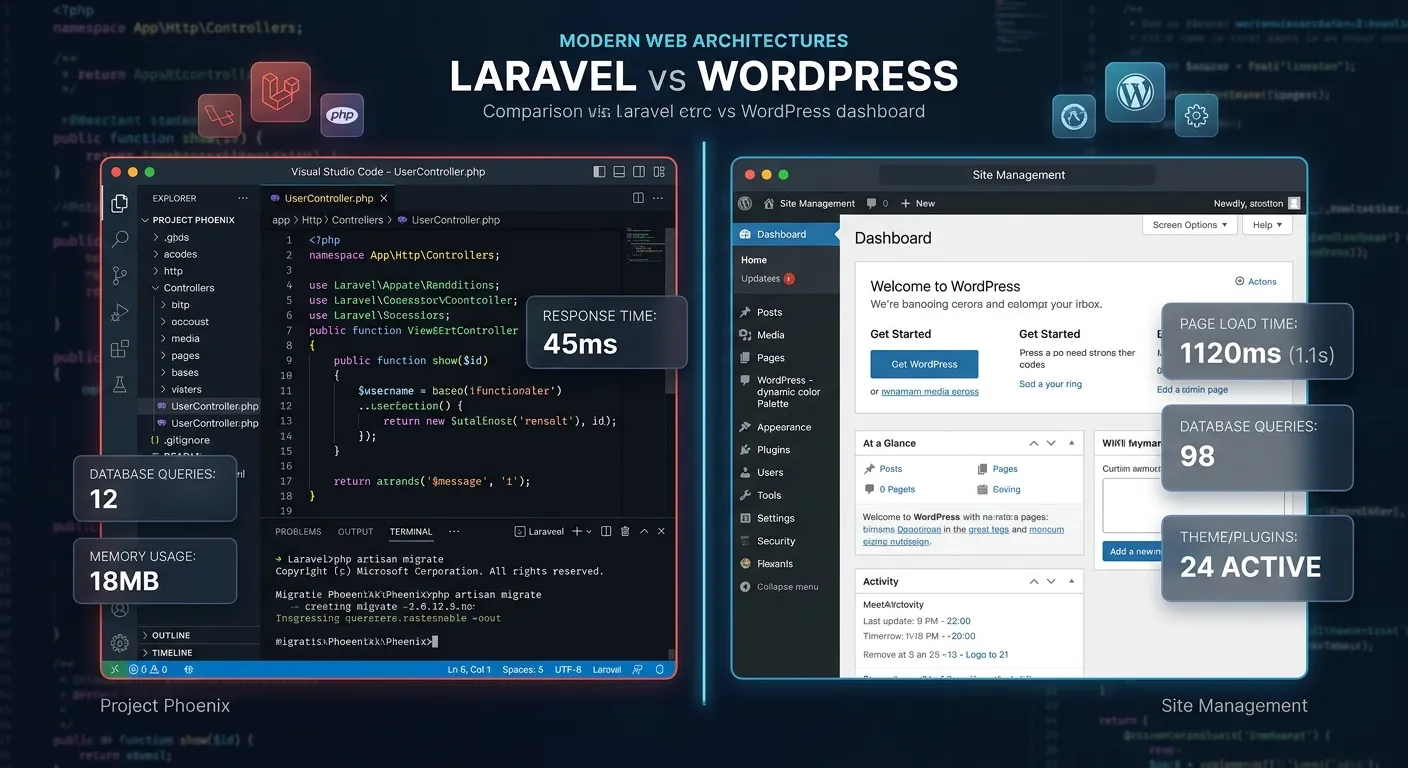
Choosing the right platform is critical for your project's success. This in-depth analysis will help you decide whether a modern Laravel-based CMS or the ubiquitous WordPress is the best fit for your needs, team, and goals.
Executive Summary: Key Decision Factors
The debate between a custom Laravel CMS and WordPress isn't just about features—it's about philosophy, control, and long-term viability. WordPress powers over 40% of the web, offering unparalleled ease of use. In contrast, Laravel, a powerful PHP framework, provides the foundation for bespoke, high-performance content management systems like Waravel, designed for developers and enterprises.
WordPress: The Universal Solution
- Ease of Use: Intuitive dashboard, perfect for non-technical users.
- Plugin Ecosystem: Over 60,000 plugins for nearly any functionality.
- Community & Support: Vast global community and abundant resources.
- Themes: Countless pre-designed themes for rapid deployment.
Laravel CMS: The Developer's Choice
- Performance & Speed: Built on modern PHP with optimized caching out-of-the-box.
- Security: Robust architecture with built-in protection against common threats.
- Scalability: Engineered to handle complex, high-traffic applications.
- Customization: Complete control over codebase and architecture.
Head-to-Head Analysis: Laravel CMS vs WordPress
⚡ Performance & Speed
WordPress can suffer from bloat due to plugins and themes, impacting page load times. Laravel applications, by design, are lean and fast. Eloquent ORM, efficient routing, and built-in caching mechanisms like Redis/Memcached support make Laravel CMS solutions inherently faster.
Pro-Tip: For complex sites where speed directly impacts revenue (e.g., e-commerce, SaaS), a Laravel-based CMS like Waravel provides a significant competitive advantage.
🛡️ Security & Reliability
WordPress's popularity makes it a prime target for attacks, especially when using poorly-coded plugins. Laravel includes built-in protection against SQL injection, cross-site request forgery (CSRF), and cross-site scripting (XSS). Its structured architecture minimizes security risks.
Expert Insight: Enterprise and government projects often mandate Laravel or similar frameworks due to their stringent security posture and audit-friendly code structure.
📈 Scalability & Growth
Scaling WordPress often requires complex caching layers, external databases, and CDN configurations. Laravel is built for scale from the ground up. Its support for queue workers (for background jobs), microservices architecture, and seamless integration with cloud platforms like Laravel Vapor makes horizontal scaling straightforward.
Explore scalable Laravel CMS solutions →🔧 Customization & Control
WordPress customization often means wrestling with theme files and plugin hooks. With a Laravel CMS, you own the entire codebase. You can implement any business logic, create custom admin panels, and integrate with any third-party API without being constrained by a plugin's limitations.
Browse Laravel CMS packages & extensions →Which Platform Should You Choose? An Interactive Guide
Use the tabs below to see which platform aligns with your project's profile.
- You need a blog, brochure site, or simple e-commerce store launched quickly.
- Your team has little to no coding experience and needs a visual editor.
- Your budget is limited, and you rely on off-the-shelf themes/plugins.
- You don't anticipate needing highly complex, custom functionality.
- You are building a custom web application (SaaS, marketplace, complex platform).
- Performance, security, and scalability are non-negotiable requirements.
- You have or plan to hire dedicated developers to build and maintain the project.
- You require deep integrations with other systems and APIs.
- You want to migrate from WordPress to Laravel for more power and control.
Ready to Elevate Your Project Beyond WordPress?
If you've outgrown WordPress's limitations, migrating to a modern Laravel CMS is a strategic move. Tools like Waravel's automated migration tools make this transition seamless, preserving your data, SEO rankings, and content structure.
Explore the features, check the pricing, or join our community.
Final Verdict: It's About Your Project's DNA
The Laravel CMS vs WordPress debate ultimately boils down to your project's complexity, team expertise, and long-term vision. WordPress remains the king of simplicity and quick wins for standard websites. However, for projects where performance, security, and bespoke functionality are critical—the kind of projects that drive modern businesses—a Laravel-based CMS is the superior, forward-looking choice.
Investing in a Laravel CMS is an investment in your project's future stability and scalability. Platforms like Waravel bridge the gap, offering Laravel's power with user-friendly management tools. Assess your needs, consider your resources, and choose the platform that aligns with where you want your digital presence to be in the next five years.
Need help deciding or executing? Hire expert developers who specialize in both WordPress and Laravel to guide your strategy and implementation.