Is Your WordPress Too Expensive to Maintain? A Cost Breakdown
Hidden fees, plugin conflicts, and security updates are draining your budget. Discover a smarter, more sustainable solution.
Hire a Laravel Expert Today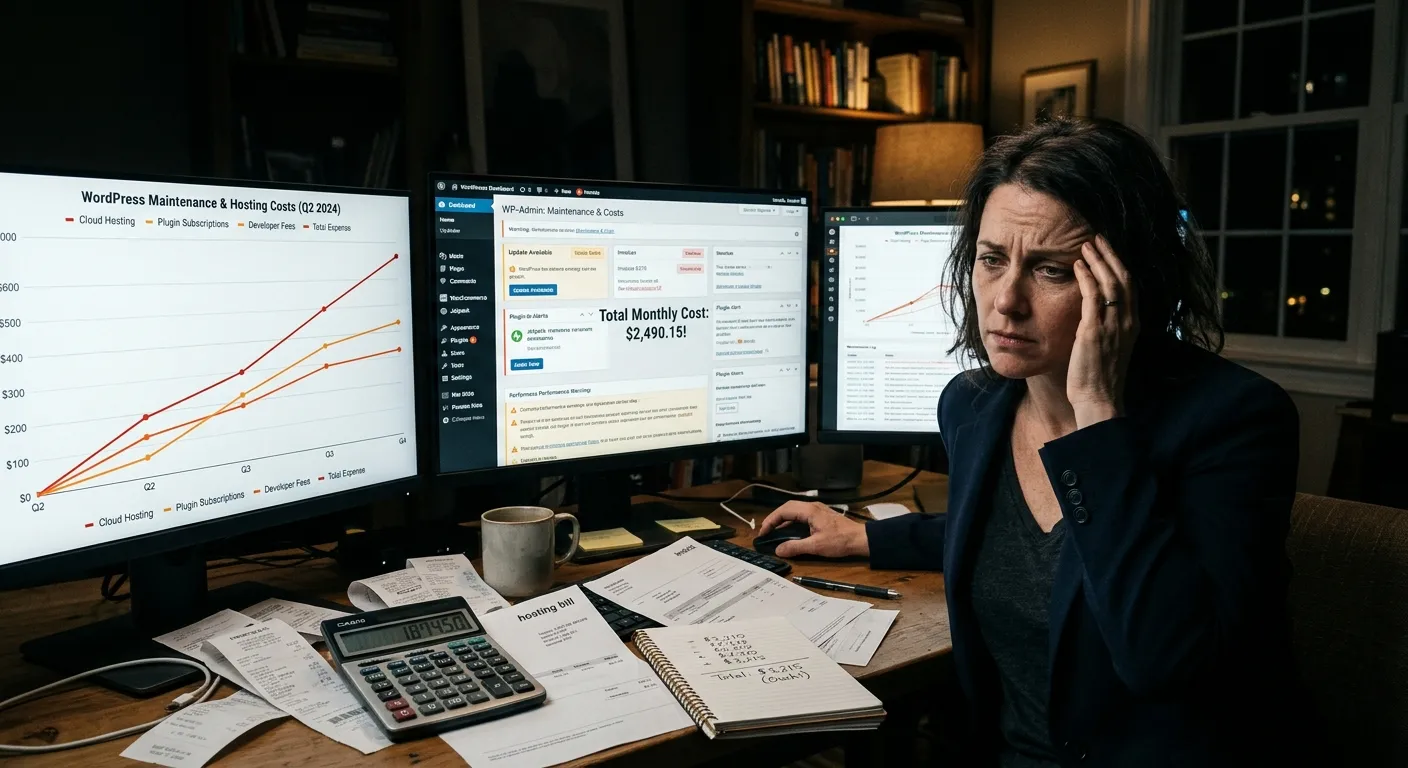
For many businesses, the initial appeal of WordPress—its ease of use and vast ecosystem—slowly fades under the relentless weight of ongoing maintenance costs. What begins as a free platform can quickly become a financial sinkhole, making your WordPress too expensive to maintain for the long haul. This article breaks down the true costs and presents a modern, cost-effective alternative.
1. Hidden Plugin & Theme Costs
Premium plugins and themes require annual renewals for updates and support. A site with 10-15 essential plugins can easily cost over $500/year just in licenses, locking you into a recurring payment cycle.
2. Developer Dependency
Every update risks breaking your site due to plugin conflicts. You're forced to hire developers constantly for troubleshooting, minor edits, and compatibility fixes, turning your site into a retainer-based project.
3. Security & Performance Tax
WordPress's popularity makes it a prime target. You need security plugins, malware scans, and performance optimizers—each adding cost and complexity just to keep your site safe and fast.
The True Total Cost of WordPress Ownership
When you add up hosting optimized for WordPress, premium security suites, backup solutions, mandatory plugin updates, and developer hours for routine maintenance, the annual cost can soar into the thousands. This recurring expenditure makes WordPress too expensive to maintain for businesses seeking predictable budgeting and a better return on investment.
Pro-Tip: Audit Your WordPress Costs
List every annual subscription, developer contract, and hosting fee related to your WordPress site. You'll likely discover the total is significantly higher than anticipated, signaling it's time for a platform change.
The Efficient Alternative: Migrate to a Laravel-based CMS
Modern PHP frameworks like Laravel offer a structured, secure, and developer-friendly environment. By migrating from WordPress to Laravel, you escape the plugin merry-go-round and gain a clean, maintainable codebase. The long-term savings on maintenance, security, and development speed are substantial.
WordPress vs. Laravel CMS: Annual Cost Snapshot
- WordPress: Hosting ($300+) + Premium Plugins/Themes ($500+) + Security ($200+) + Developer Retainer ($2000+) = $3000+ Minimum.
- Laravel CMS (e.g., Waravel): Streamlined Hosting ($200) + Framework Security (Included) + Reduced Developer Hours ($1000) = ~$1200 Total.
The savings are clear and recurring year after year.
How to Migrate Without Business Disruption
Manual migration is complex, but automated tools make it seamless. Platforms like Waravel offer a dedicated migration tool that handles content, users, and SEO metadata automatically.
Learn the step-by-step process in our guide: How to Migrate Your Entire WordPress Site to Laravel.
Tangible Benefits Post-Migration
- Predictable Costs: No surprise plugin renewals or conflict-related developer bills.
- Superior Performance: Laravel's efficient codebase leads to faster page loads and better SEO.
- Enterprise Security: Built with modern PHP security practices, reducing the need for bloated security plugins.
- Developer Happiness: A clean codebase makes it easier and more affordable to hire and retain top Laravel talent.
Actionable Steps to Reduce Your CMS Costs
1. Conduct a Full Audit
Document every cost associated with your current WordPress site. This clarity is the first step toward justifying a platform migration to stakeholders.
2. Explore Laravel CMS Options
Investigate solutions like Waravel that provide a CMS experience on Laravel. Compare pricing and features against your current WordPress spend.
Ready to Escape the Cost Cycle?
If your WordPress is too expensive to maintain, transitioning to a modern Laravel CMS is the most strategic financial decision you can make for your digital presence. It reduces dependency, lowers long-term costs, and provides a scalable foundation.